Is turbulence dangerous?
Uncomfortable ≠ unsafe
In normal airline operations, no — turbulence is not dangerous to the aircraft. It is moving air, and your aeroplane is designed, built and tested to move with it. The one genuine risk is being unrestrained in the cabin, which is what the seatbelt sign is for.
Captain Chris Pohl — 45 years in the air, 32 of them at Virgin Atlantic.
Free online · no app store · add to your home screen in two taps
Why the aircraft copes so easily
Think of a bowl of jelly with the aircraft suspended inside it, held on every side. The air is always there — sometimes smooth, sometimes uneven. When it is uneven the wings flex, and that flexing is the design working, not the design being tested.
Before an airliner ever carries a passenger, a wing is loaded on the ground until it breaks. The load it survives is far beyond anything turbulence produces in service. In the air, pilots do not wrestle the aircraft through the bumps; they set an appropriate speed and let it ride, exactly as the manufacturer intends.
What you feel is acceleration, not distance. A movement of a few feet registers in your stomach as a plunge, particularly with no horizon to look at. The instruments on the flight deck usually show a far smaller change than your body reports.
The kinds you can meet
Clear air turbulence
Bumps in a cloudless sky, usually near a jet stream where fast and slow air meet. Nothing to see out of the window, which is why the seatbelt sign can appear without warning. Uncomfortable, well within the aircraft's limits.
Mechanical turbulence
Air disturbed by terrain — hills, mountains and buildings breaking up a steady wind. Most noticeable on approach and departure at airports surrounded by high ground, and it stops once you climb clear of it.
Wake turbulence
Twin vortices trailing from the wingtips of another aircraft. Air traffic control spaces aircraft specifically to keep you out of it, and the effect fades quickly as the vortices sink and decay.
Thermal and convective turbulence
Rising columns of warm air on a hot day, and the far stronger currents inside storm clouds. The first makes for a bumpy climb; the second is avoided entirely, using weather radar to keep a wide berth from any cell.
What the crew is doing
Turbulence is planned for long before you board. Crews read forecast charts for the route, watch the weather radar ahead, and listen to reports from aircraft flying the same track a few minutes in front. If there is smoother air at another level, they ask for it.
When the seatbelt sign goes on it is a comfort and injury-prevention measure, not an emergency signal. The cabin crew sit down for the same reason you fasten your belt: the only people who get hurt in turbulence are the ones who were not secured.
Common questions
Is turbulence dangerous?
In normal airline operations, no. Turbulence is uncomfortable rather than structurally dangerous. An airliner's wings are designed to flex, and the airframe is tested well beyond any load turbulence produces. The real risk in turbulence is being unrestrained inside the cabin, which is exactly why the seatbelt sign exists. Keep your belt loosely fastened whenever you are seated and turbulence becomes a comfort issue, not a safety one.
Can turbulence make a plane crash?
Turbulence alone does not bring down a modern airliner. Aircraft are certified to withstand far greater forces than turbulence generates, and pilots are trained to fly through it by managing speed rather than fighting the controls. Injuries in turbulence happen almost entirely to people or objects that were not secured, not to the aircraft itself.
Can turbulence break the wings?
No. Wings are built to bend. During certification a wing is loaded until it fails, and that failure point is far above anything encountered in service. What feels like alarming movement from your seat is the wing doing its job — absorbing the energy of uneven air instead of resisting it rigidly.
Why does it feel like the plane is dropping?
It rarely drops far. Your body senses a change in acceleration, not distance, so a movement of a few feet can feel like a plunge — especially when you cannot see the horizon. The altimeter usually shows a change far smaller than the one your stomach reports.
Do pilots worry about turbulence?
Not about safety. Pilots think about turbulence in terms of passenger comfort and hot drinks in the galley. Crews plan around it using forecasts, weather radar and reports from aircraft ahead on the same route, then request a different altitude or a small course change if there is smoother air available.
What is the worst kind of turbulence?
Convective turbulence, associated with thunderstorms, produces the strongest air movement — which is precisely why crews avoid storm cells by a wide margin using onboard weather radar. The kind most likely to arrive unannounced is clear air turbulence, which is why the seatbelt sign may come on with no visible cause outside.
How can I stay calm during turbulence?
Breathe out for longer than you breathe in, let the seat carry your weight instead of bracing against it, and give your mind something accurate to hold onto about what the aircraft is doing. The free app has a live turbulence screen and a recording in Captain Chris's own voice for exactly this moment.
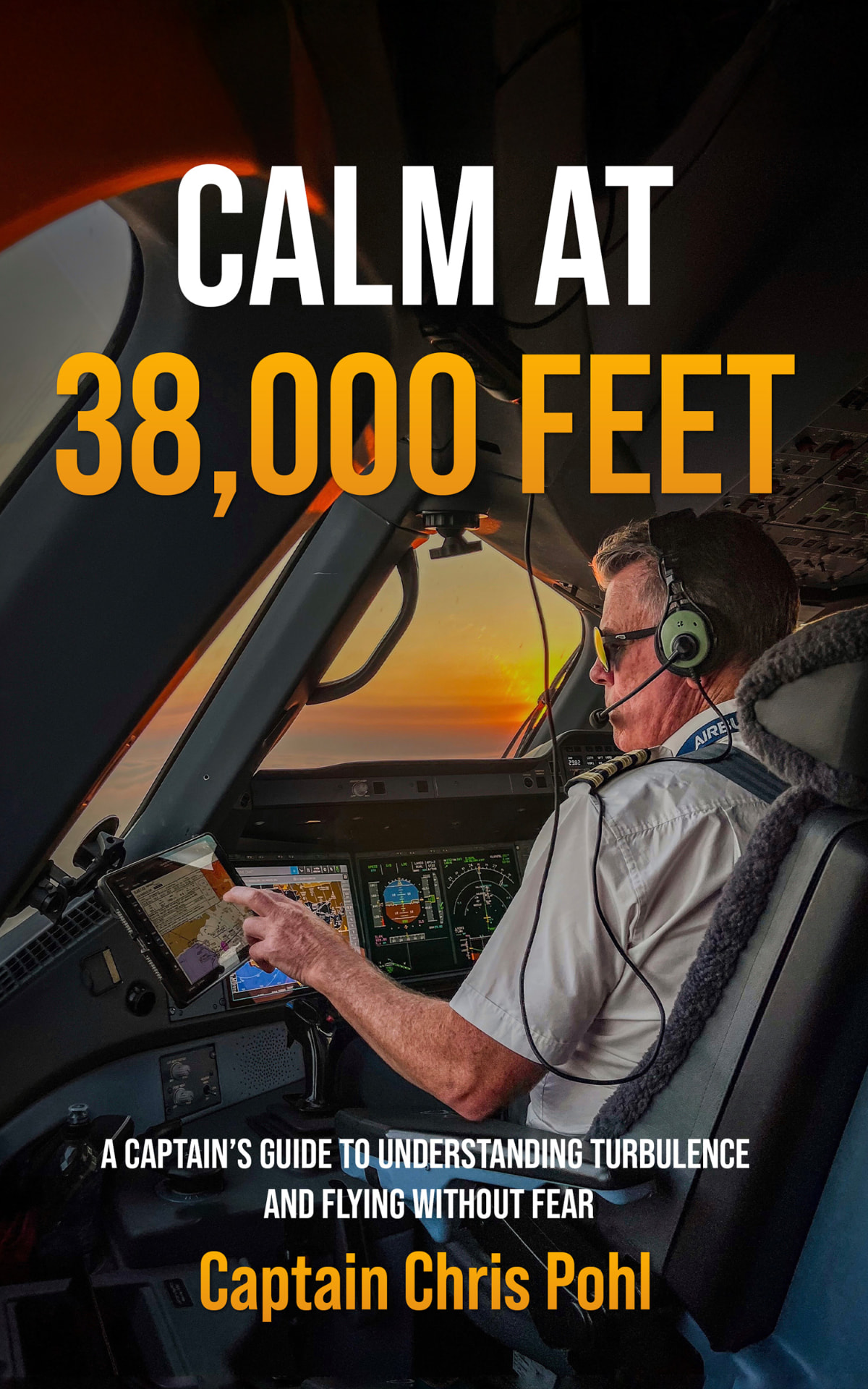
The free app carries this explanation into the moment it matters — plus cabin-noise decoding, breathing tools and Captain Chris's voice in your ear.
This page offers education and comfort, not medical treatment — if flying anxiety is severely affecting your life, please speak to a healthcare professional. Always follow the instructions of your flight crew.