The Calm Guide
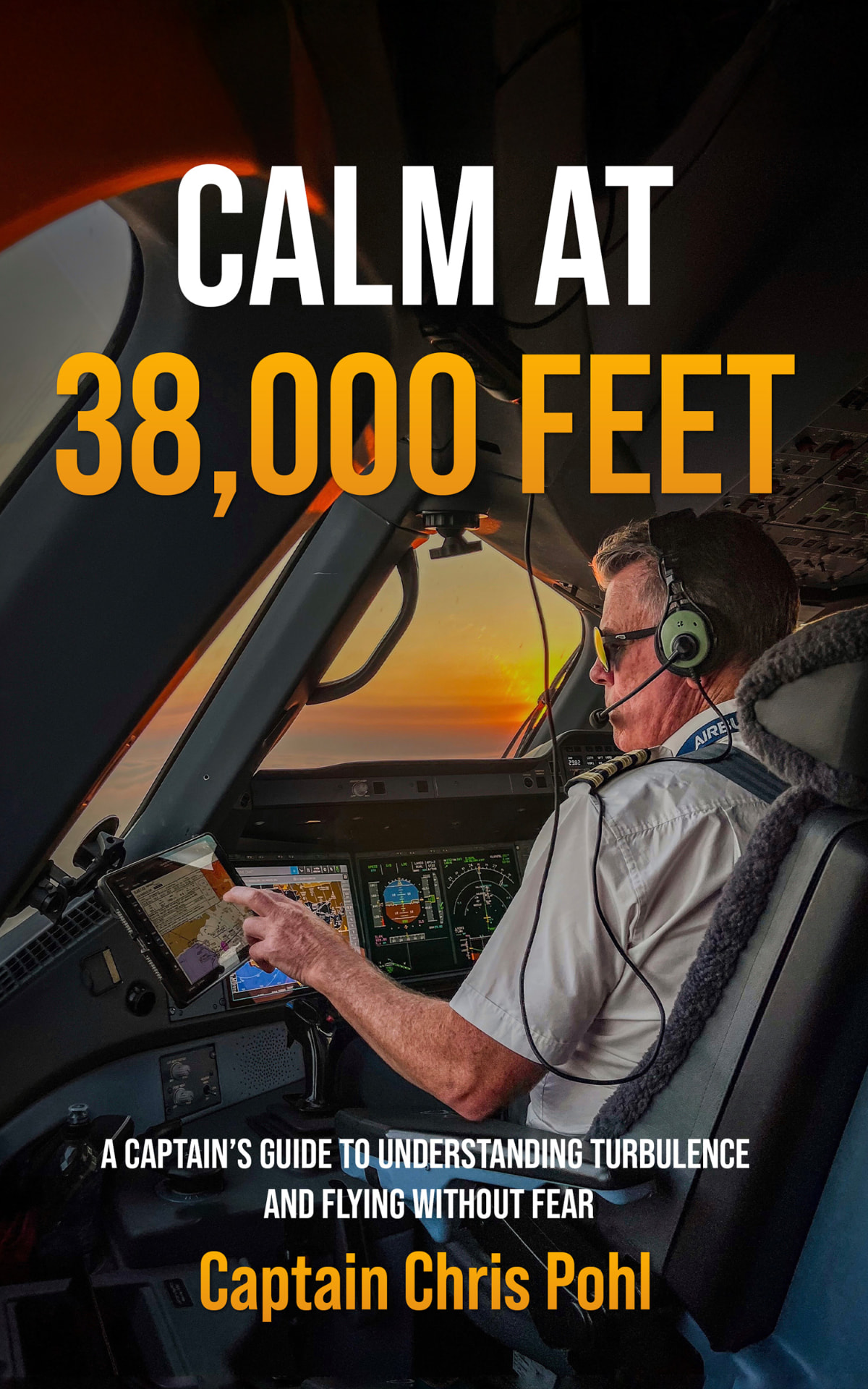
Everything here comes from Calm at 38,000 Feet — rewritten as short modules, with a takeaway you can carry onto the aircraft.
Why We Fear Flying
Fear of flying is one of the most common fears in the world. And yet, when you look at the facts, flying is one of the safest things you will ever do. So why does it feel so frightening?
6 min readWhat Is Turbulence?
Air is a fluid. It moves, it rises, it sinks and it swirls, exactly like water in a river. Turbulence is simply the aircraft travelling through air that is moving.
8 min readWhat's That Noise?
For many nervous passengers it isn't turbulence at all. It's the noises. The thump. The whirr. The clunk. Every one of them has a name, and none of them is a surprise to us.
6 min readWho Is Really Flying the Aircraft?
You may never see us. But there are two highly trained pilots up front, and behind them an entire system of people whose only job is to make your flight uneventful.
7 min readHow Safe Is Your Aircraft?
Modern airliners are built on one simple principle: never depend on a single thing. Almost everything important exists two or three times over.
7 min readReassuring Statistics & the Reality of Risk
Facts rarely dissolve fear on their own. But they give the calmer part of your mind something solid to hold while the anxious part settles.
5 min readBefore You Board: What We're Doing
While you're at the gate, an aircraft doesn't simply wait. It is being walked around, read, tested, fuelled, loaded, signed for and cross-checked. Nothing moves until every item on that list is complete.
6 min readBuilt to Be Tested: Your Aircraft, Part by Part
The parts of the aircraft that look most alarming from a window seat are usually the ones that have been tested hardest. Here's what you're actually sitting in.
6 min readWhy aircraft don't fall out of the sky
Lift isn't a trick. It's continuous, and the air is always there.
Why wings flex
A flexing wing is absorbing energy. A rigid one would be the problem.
Why pilots change altitude
We're shopping for smoother air, usually after a chat with the aircraft ahead.
Why takeoff is so powerful
Brief, precise, and calculated for today's weight, wind and runway.
Why landings can feel bumpy
A firm landing is often the safe one — especially on a wet runway.
What happens if an engine fails
The aircraft flies on the other one. We practise it twice a year.